The Elite Edge: The Negotiation Blind Spot 💰: Why Smart People Leave Money, Title, and Power on the Table
Doing The Research For You.

Deepali Vyas
April 06, 2026
Elite Edge | Vol 2 Week 14
💥 Here's a number that should bother you: the average professional negotiates their compensation exactly once in every career move — at the initial offer stage — and then never again.
One negotiation. For a decision that will compound for years.
I've negotiated executive compensation packages for 25 years. I've watched brilliant, high-performing professionals accept their first offer because they didn't want to seem difficult. I've watched people negotiate salary while leaving $40,000 in signing bonuses and 50,000 in equity on the table because they didn't know those were negotiable too. I've watched executives accept titles two rungs below what their market value commanded because no one told them the title was a negotiable item.
This issue is the playbook I give to my clients before every major career move. It's the one most people never get.
🔍 THIS WEEK'S DEEP DIVE
The Negotiation Blind Spot
Why the One-Conversation Model Is Costing You
Most professionals think of negotiation as a single event: you get an offer, you counter, you settle. Done for another two or three years. That framing is the root of the problem.
Compensation is not static. It's a living number that's being actively shaped — by your visibility, your leverage, your timing, and your willingness to advocate for yourself. Every year you don't negotiate, you're not staying even. You're falling behind, because the market keeps moving and your internal comp doesn't automatically follow it.
The real cost of not negotiating: Studies consistently show that professionals who negotiate starting salary earn $1M–$2M more over a 40-year career than those who don't.
That's not just from the first raise. It's from the compounding effect of each subsequent role starting from a higher baseline.
The first conversation you don't have is the most expensive one. |
Total Comp Is Not Salary — Know What You're Actually Negotiating
One of the most consistent blind spots I see — especially among professionals moving from mid-level to senior roles — is treating compensation as a salary conversation. Salary is just one line. Total compensation is an entirely different equation.
Here's what's actually on the table:
• Base salary — the most visible number and often the most constrained
• Annual bonus — target percentage, structure, and what determines payout
• Equity — RSUs, stock options, grant size, vesting schedule, refresh cadence
• Signing bonus — often available when base is capped, particularly in band-locked orgs
• Title — which determines your market value for every role you take after this one
• Scope — the size of team, budget, and P&L you're responsible for (directly affects future comp)
• Remote/flex arrangements — worth real dollar value in commute, time, and quality of life
• Accelerated review — negotiating a 6-month review instead of 12 for a comp increase
• Professional development — conference budget, executive coaching, continuing education
If you're only negotiating salary, you're negotiating a fraction of the actual deal.
✅ MY PRESCRIPTIVE ADVICE: THE 5 NEGOTIATION WINDOWS
There Are 5 Moments to Negotiate — Most People Only Use 1
The offer stage is just one of five distinct windows where negotiation is not only appropriate — it's expected. Here's how to see and use all of them.
Window 1: The Offer Stage (Most Leverage You Will Ever Have)
This is peak leverage — the company has decided they want you before you've committed to them. A written offer before acceptance is your strongest position. Counter immediately on anything that doesn't meet your number. Here's the language that works:
The opener that keeps the door warm: "I'm genuinely excited about this role and this team — I want to make this work. The base is slightly below where I need to be to make this move. Is there flexibility to get to [your number]?"
Then stop talking. The discomfort of silence is theirs to resolve. |
Window 2: The 30/60/90-Day Check-In (The Overlooked Window)
Most professionals don't know this window exists. If you've been delivering at a higher scope than your role description or title reflects, the 60–90 day mark is the moment to have that conversation — before your trajectory gets anchored to your starting point.
Use it to recalibrate scope, surface a title adjustment, or set the expectation for an accelerated review. Frame it as: "I want to make sure we're aligned on what success looks like at 6 months — and what a conversation about my role/comp might look like at that point."
Window 3: Post-Win Moments (Strike While Value Is Fresh)
The best time to negotiate a raise is not at the performance review — it's immediately after a visible win, while your value is fresh in leadership's mind. Closed a big deal? Shipped a major initiative? Led the org through a crisis? That is your moment. Don't wait for the calendar to tell you when it's appropriate.
Window 4: Expanded Scope Conversations (When the Job Gets Bigger, So Should the Pay)
If your team has grown, your budget has expanded, or you've absorbed additional responsibilities — that's a comp event. It shouldn't wait for review season. The framing: "My scope has expanded significantly since I was hired. I'd like to talk about how my comp reflects the work I'm now accountable for."
Window 5: Competing Offer or Market Data (The External Anchor)
You don't need a competing offer to use market data as leverage. Tools like Levels.fyi, LinkedIn Salary Insights, and Glassdoor give you benchmarks. "I've done some market research and my current compensation is below the median for this role and scope at comparable organizations — I'd like to discuss closing that gap." That's a reasonable, professional ask, and it works.
The Title Negotiation Most People Miss
Title is compensation. Every title you accept sets the floor for your next negotiation. If you take a Director role when the market would place you at VP, you'll spend the next 18 months proving you deserve a title your peers already have — and you'll feel it in every subsequent offer.
Always negotiate title separately from salary. Make them two distinct conversations. Salary often has a band ceiling. Title frequently has more flexibility — especially at orgs that are actively trying to win your commitment.
Title negotiation language: "I want to make sure the title reflects both the scope of the role and where I am in my career trajectory. Based on the team size, budget accountability, and the external market, [VP/Managing Director/Principal] feels like the right alignment. Is there flexibility there?" |
🗂 RESOURCES & CURATED LIST
Your Pre-Negotiation Toolkit
Use these before any compensation conversation — whether it's an offer, a raise ask, or an equity refresh.
📋 Checklist: Total Comp Audit (Run This Before Every Negotiation)
• Do you know the market median for your role, title, and geography? (Levels.fyi, LinkedIn Salary, Glassdoor)
• Have you accounted for ALL comp elements — base, bonus, equity, benefits, and flexibility?
• Do you know your equity's current value and vesting schedule?
• Have you identified your walk-away number AND your target number? (They're not the same thing.)
• Have you decided which elements you'll negotiate first — and which you'll hold as backup?
• Do you know the company's comp band structure? (If they're band-locked on base, where else can you push?)
🔧 Benchmarking Tools: Know Your Number Before You Walk In
Levels.fyi — Best for tech roles and total comp transparency (equity included)
Glassdoor — Self-reported salary data with company-specific detail
Payscale — Useful for non-tech roles and mid-market company benchmarks
Radford / Mercer Surveys — If you're at the executive level, ask your recruiter for these benchmarks
💬 Template: The Equity Due Diligence Questions (Ask Before You Sign)
Before accepting any equity package, get answers to: 1. What is the current 409A valuation per share? 2. What is my grant size and what % of total outstanding shares does it represent? 3. What is the vesting schedule and cliff? 4. What happens to my unvested shares in an acquisition? 5. Is there an equity refresh cadence — and what triggers it? 6. What is the preferred vs. common stock structure? (Relevant in a liquidation event) 7. What has the company's equity growth trajectory looked like over the past 3 years? |
📚What I Read This Week…
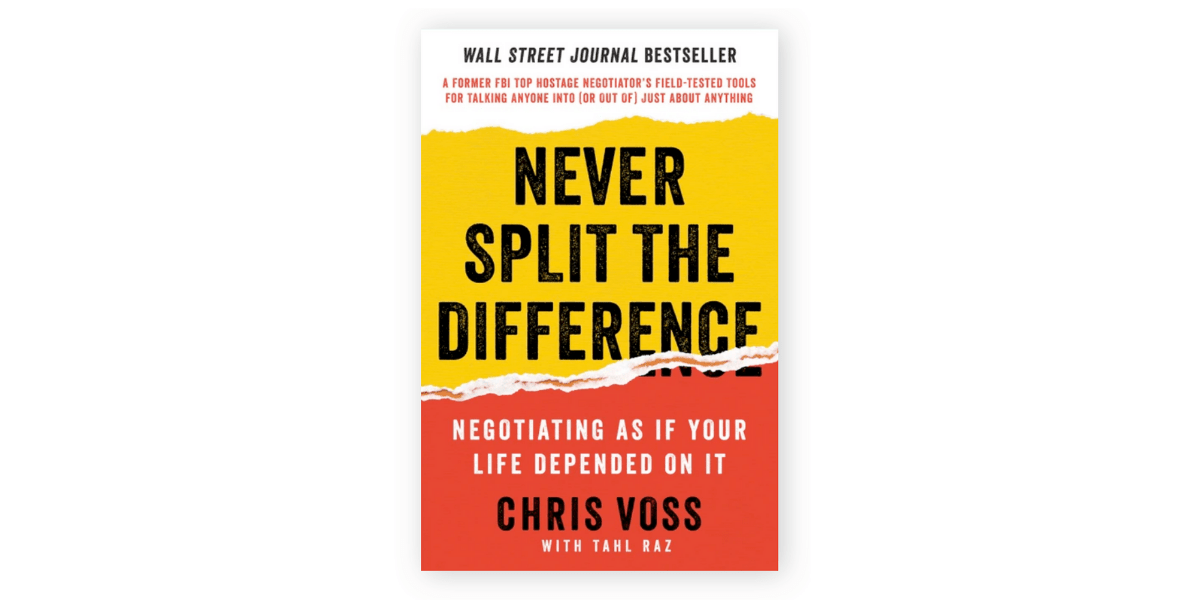
From my ELITE LIST » Book Recommendation
Never Split the Difference by Former FBI hostage negotiator Chris Voss who rewrites everything you think you know about negotiation. His tactical empathy framework and mirroring techniques translate directly to compensation conversations.
🎙️What I Listened to This Week… (Podcasts)
For a little levity in our week…

The Bottom Line
Every conversation you don't have is money you don't make, a title you don't hold, and leverage you don't build. Negotiation isn't aggression — it's advocacy. It's treating your career with the same rigor you'd bring to any other high-stakes business decision.
The companies you're negotiating with do this every day. They have comp bands, internal equity tables, benchmarking data, and trained HR professionals. You should walk into every conversation with the same level of preparation.
Know your number. Know your leverage. Know your moment. And when it comes — ask.
You’ve got the Edge. Now sharpen it.
Until next week,
— Deepali Vyas
Your Elite Recruiter
Doing the research so you don’t have to.
✨ UPCOMING WEBINARS ✨
🚨 April Webinars Are Live 🚨
If you’ve been thinking about getting serious about your career strategy — this is your moment. These are not surface-level sessions. This is where we shift from reacting to the market… to operating with intention.
Inside, we go deep on:
✔️ Positioning yourself for the roles you actually want
✔️ Building leverage — not just chasing opportunities
✔️ Portfolio careers, executive presence, and market strategy
✔️ Real-time coaching + tactical frameworks you can apply immediately
This is how you stop guessing… and start playing the game strategically.
📅 Upcoming Sessions
Career Game Plan
🗓 Wednesday, April 8 at 7 PM EST
🗓 Saturday, April 25 at 10 AM EST
Portfolio Career
🗓 Sunday, April 19 at 10 AM EST
🗓 Thursday, April 30 at 7 PM EST
👉 Secure your spot: https://www.deepalivyas.com/webinar
Seats will fill. They always do.
🗞 IN THE PRESS
The Elite Recruiter — Featured in The Daily Front Row
I was recently featured in The Daily Front Row, where I shared my perspective on confidence, career positioning, and what actually sets professionals apart in high-stakes environments.
It’s a different lens — but the same truth:
How you show up matters just as much as what you’ve done.

💼 This Week’s Elite Job Drops 💼
💼 Exclusive Job Drops — Before They Hit the Market
These openings are under the radar — not on LinkedIn, not on job boards. I’m sharing them here first, straight from my insider network.

✨ ELITE RESOURCES ✨
✨ Elite Recruiter Tools (Built for This Moment)
Power Presence Bundle — The Modern Career Portfolio
Resume Fix + LinkedIn Optimization. This isn’t cosmetic editing. It’s strategic repositioning for the modern job market.
The traditional résumé is losing its power. Hiring managers are overwhelmed with AI-generated applications, and the professionals who stand out today aren’t just submitting résumés. They’re presenting evidence of value. This bundle helps you build the two assets that now drive career momentum:
• a skills-based resume that highlights capabilities and outcomes
• a LinkedIn profile that functions as your living reputation
Think of it as your career portfolio — not just a document.
👉 Explore here: https://www.deepalivyas.com/products
✅ Meet our Elite Coaching Team
Why Coaching Matters & What Makes Us Different
Most coaches teach theory. We've spent decades on the other side of the table—and we know what actually moves careers forward.
Ready to think bigger about your career?
If LinkedIn visibility matters to your career, this is a smart tool to know about👇🏼
Final Layer — is a LinkedIn AI Agent that helps you stay visible, credible, and consistent — without turning content creation into a second job.
Suggests on-brand topics aligned to your professional persona
Writes high-quality posts in your voice (not generic AI slop)
Adds research-backed facts so you sound informed without hours of digging
One-click scheduling to post at optimal engagement times
Elite Edge takeaway:
If you’ve been meaning to build your personal brand but keep putting it off, this removes the friction — and the excuses.
How Jennifer Aniston’s LolaVie brand grew sales 40% with CTV ads

The DTC beauty category is crowded. To break through, Jennifer Aniston’s brand LolaVie, worked with Roku Ads Manager to easily set up, test, and optimize CTV ad creatives. The campaign helped drive a big lift in sales and customer growth, helping LolaVie break through in the crowded beauty category.
🌟 About Me 🤝🏻

🎥 FOLLOW ME
🔥 ELITE RECRUITER ON THE MARCH TO 1 MILLION
We’re almost there! If you’ve found this newsletter useful, help me scale it:
Share, forward, comment, or repost. Every action gets us one step closer.
Feedback is a Gift
I would love to know what you thought of this newsletter and any feedback you have for me. Do you have a favorite part? Wish I would add something? Felt confused? Please reply and share your thoughts!