The Elite Edge: 💰 The $200K Professional vs. The $2M Executive
Doing The Research For You.

Deepali Vyas
September 28, 2026
Elite Edge | Vol 2 Week 39
When I started The Elite Edge, I made you a promise. No fluff. No corporate buzzwords. Just the real, unfiltered truth about how careers work, the tools to act on it, and the reading I do so you don't have to.
107 issues and 85,000+ of you later, that promise hasn't changed. So this week, I'm going back to basics: truth, tools, and what I read.
And the truth is going to sting a little.
In 25 years of executive search, I have placed people at every level. I have seen the offer letters. I have seen the equity grants. And I can tell you with total certainty: the person making $2 million is not ten times smarter than the person making $200,000. They are not working ten times harder. Most of the time, they are working fewer hours.
They are simply being paid for something completely different.
And until you understand what that something is, you can work as hard as you want. You will stay exactly where you are.
🧮 The Breakdown: What You're Actually Being Paid For
A $200K professional is paid for output. A $2M executive is paid for outcomes.
Output is the deck, the report, the project delivered on time. Outcomes are revenue protected, risk avoided, markets entered, talent kept. One is measured in hours. The other is measured in enterprise value.
Here's how that plays out in real life:
The $200K Professional | The $2M Executive | |
|---|---|---|
Gets paid for | Doing the work | Deciding which work matters |
Brings to the meeting | Answers | Better questions |
Talks about | Effort ("We worked all weekend") | Impact ("We protected $40M in renewals") |
Decision style | Waits for 100% of the data | Makes the call at 70% and owns it |
Calendar | Full of meetings | Protects time to think |
Network | Peers and friends | Sponsors, board members, and the market |
Relationship with risk | Avoids mistakes | Takes smart bets and learns out loud |
Comp conversation | Negotiates a raise | Negotiates scope, equity, and ownership |
Reputation | Known by their team | Known by recruiters before they ever apply |
Read that table again and be honest about which column you live in. Not which column you want to live in. Which one your calendar says you live in.
📕 The Unwritten Rules
Rule 1: Hard work has a ceiling. Leverage doesn't. There are only so many hours in a week. The $200K professional scales by adding hours. The $2M executive scales by adding people, systems, and decisions. If your plan for next year is "work harder," you have already capped yourself.
Rule 2: If you can't put a number on it, it didn't happen. Executives speak in revenue, cost, risk, and time. "I led the migration" is a task. "I led the migration that cut $3M in annual vendor spend and shaved six weeks off close" is a business case. Nobody pays $2M for tasks.
Rule 3: You are paid for the problems you absorb. The bigger and messier the problem you can take off someone's plate, the more you're worth. The $2M executive is the person the CEO calls when something is on fire. Ask yourself: who calls you when things go wrong?
Rule 4: Competence gets you hired. Judgment gets you promoted. At the senior level, everyone is competent. What separates people is judgment: knowing what to ignore, when to escalate, and when to say no. Being the person who does everything is not a flex. It's a signal you can't prioritize.
Rule 5: The market sets your price, not your manager. Your manager decides your 3% merit increase. The market decides your next $500K. If the only person who knows your value is your boss, your ceiling is your boss's budget.
Rule 6: Executives don't get "developed." They get selected. Nobody is going to send you to a program and hand you the altitude. The $2M executive started operating at the next level before anyone gave them the title. They acted their way into it.
♟️ Your Q4 Toolkit: 5 Tools to Close the Gap
Two weeks ago, I gave you the BRAC System and the Now-to-December Promotion Sprint to win this promotion cycle. This week is the bigger game: the altitude shift that changes what you get paid for, not just what your title says.
There are about 13 weeks left in the year. Bonuses, reviews, and 2027 budgets are being decided right now, whether you're in the room or not.
Tool 1: The Calendar Audit (15 minutes)
Pull up your last two weeks of meetings. Tag every block with one of two labels:
$200K time: executing, updating, reporting, attending
$2M time: deciding, shaping strategy, building relationships above and across, developing others
Count them up. Most people I coach are shocked by how lopsided it is. Your goal for Q4 is not perfection. It's to move 10 points toward the right column. Delegate one recurring meeting. Decline one status update that could be an email. Use that time for one conversation that actually moves the business.
Tool 2: The Enterprise Math Rewrite
Your BRAC Book tracks your wins. This tool translates them into the language executives get paid in. Take your three biggest wins and run each through this formula:
What I did → What changed → What it was worth
Before: "Launched the new client onboarding process." After: "Rebuilt client onboarding, cutting time-to-revenue from 45 days to 20 and accelerating roughly $2M in first-year billings."
No exact number? Estimate responsibly and show your logic. A defensible estimate beats a vague adjective every single time.
Tool 3: The Three-Move Altitude Plan
Before December 31, commit to three moves:
One decision you own. Find something stalled on your team or in your org and make the call. Then communicate it like a leader: the decision, the reasoning, the risk, the next step.
One room you get into. A QBR, a planning session, a cross-functional steering meeting. Ask to attend, bring one sharp point of view, and follow up afterward.
One relationship above you. Your skip level, a peer of your boss, a senior leader in another function. One real conversation about where the business is going, not about your career.
Tool 4: The "Scope, Not Raise" Script
Don't walk into your year-end conversation asking for a raise. Walk in asking for scope. Scope is what moves comp in the long run.
"I'm proud of what we delivered this year, and I want to make sure I'm building toward the next level. Looking at 2027, what are the biggest problems you'd want someone to own? I'd like to take one of those on. And I'd like us to agree on what success looks like, so that when we sit down next year, we're talking about the outcome, not just the effort."
Then follow with the comp piece:
"Based on the scope I'm taking on and the market data for this level, I'd like to talk about what my compensation looks like when I deliver it. Can we put that on paper now?"
Tool 5: The Market Test
Answer these honestly:
Has a recruiter reached out to you in the last 90 days?
If someone searched your name right now, would they understand your value in 10 seconds?
Could three people outside your company describe what you're great at?
If you answered no to two or more, your value is invisible to the market. And invisible people get paid what their manager decides, not what the market will bear.
🔥 The Corporate Truth
The gap between $200K and $2M is not talent. It's not luck. It's not even hours.
It's altitude.
It's knowing what you're being paid for, speaking the language of the people who pay for it, and making sure the market knows your name before you need it to.
You don't get promoted into that altitude. You start flying there, and the title catches up.
That's the game. Now you know how it works.
📊 Quick Poll
Be honest: which column does your calendar say you live in?
Mostly $200K. I'm buried in execution.
A mix, but I'm stuck doing both jobs.
Mostly $2M. I've made the shift.
I didn't know there were two columns until today.
✨ ELITE TOOLS, HACKS & TIPS (New) ✨
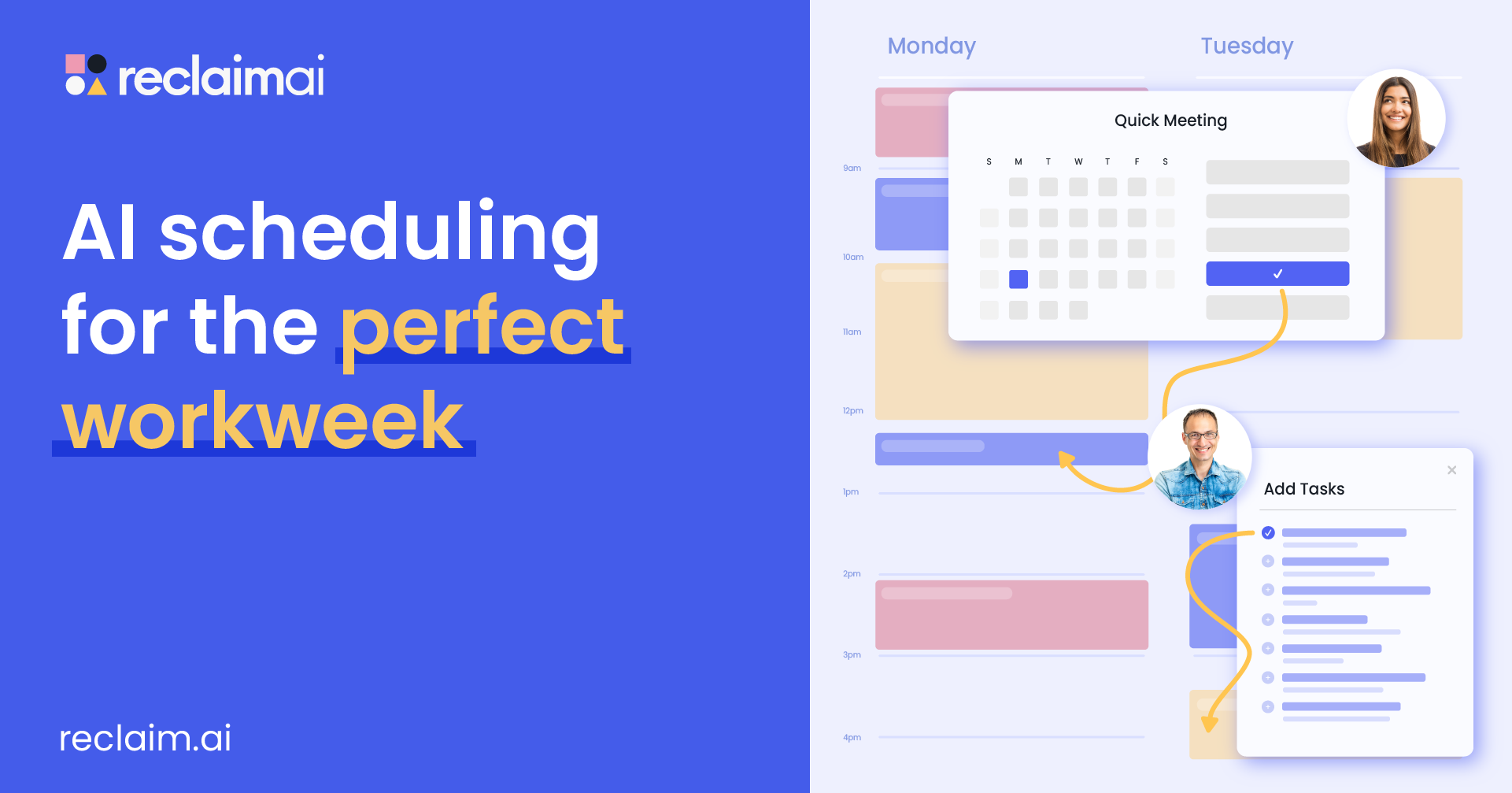
AI Tool of the Week: Reclaim.ai
Reclaim.ai: Your Calendar Audit on Autopilot
Tool 1 above takes 15 minutes by hand. Reclaim does it for you, every week.
It connects to Google Calendar or Outlook and shows you exactly where your time is going: meetings versus deep work, your heaviest meeting days, planned versus actual time. It even has an AI chat for weekly insights, so you can literally ask it, "How much of my week was spent in status meetings?"
The feature I love for this issue: Focus Time. You set a weekly goal for thinking time, and Reclaim's AI defends those blocks on your calendar while staying flexible when something urgent comes up. That's how you protect your $2M hours.
How to use it this week:
Connect your work calendar (there's a free plan).
Let it run for one week, then check your analytics.
Set a Focus Time goal of even 3 to 4 hours a week and guard it like a client meeting.
The $2M executive doesn't have more time than you. They just decided what their time is for.
📚What I Read This Week…
CEO Pay, Economic Policy Institute (September 15, 2026)
EPI released its annual CEO pay analysis this month, and the headline number is wild: in 2025, CEOs at major U.S. companies were paid 325 times what a typical worker earned. In 1965, that ratio was 21 to 1.
You can have strong feelings about that gap, and plenty of people do. EPI is a left-leaning think tank, and whether executive pay is justified is a real debate. But here's the career lesson I want you to take from it, whatever side you're on:
That gap is not built on salary. It's built on ownership. The biggest packages are overwhelmingly equity: stock that pays when the company's value grows. Executives are paid to own outcomes, and they share in the upside when they deliver.
So the question for you isn't "is that fair?" The question is: what do you own? Equity, a P&L, a book of business, a product line, an audience, a side business? If the answer is "nothing," every dollar you earn is a dollar someone else decided to give you.
Read it here: https://www.epi.org/publication/ceo-pay/

🎙️What I Listened to This Week… (Podcasts)
🎙️ The People Podcast: The Path to the Boardroom (featuring yours truly)
This week, what I listened to was... me. I sat down with The People Podcast to talk about the path to the boardroom, and honestly, it's the natural next chapter of everything in this issue.
Because here's the thing: if the $2M executive is paid for outcomes, the board director is paid for judgment. No team. No title on a door. Just your perspective, your pattern recognition, and your reputation in the room where the biggest decisions get made.
A few things we got into:
Takeaway 1: When to start preparing for a board seat
Takeaway 2: What boards are actually looking for right now
Takeaway 3: The biggest mistake executives make going after their first seat
If you've ever wondered whether a board seat is in your future, or how people actually get there, give this one a listen. The path starts a lot earlier than most people think. It starts with the altitude shift we talked about above.

🎧 Watch here: https://youtu.be/u4nRinre75U
Until next week,
You’ve got the Edge. Now sharpen it.
Until next week,

Your Elite Recruiter
Doing the research so you don’t have to.
🚀✨ THE LINKEDIN CHALLENGE ✨🚀
LinkedIn Challenge — 3 days left to sign up!
The Elite Recruiter LinkedIn Challenge starts Wednesday, October 1st. This is your last call.
Everything in this issue comes back to one thing: the $2M executive is known by the market before they ever need it. That's exactly what we're building.
30 days. One action a day (10 minutes). Weekly live office hours with me and my team. We'll fix your profile, rewrite your wins in enterprise math, and build content that sounds like you, not like everyone else's AI.
Start Q4 at the right altitude. Give me October. I'll keep you accountable.
Starts October 1 | $347 | 30 Days
✨ UPCOMING WEBINARS ✨
Not Ready for 30 Days? I Always Have Other Resources for You.
If the Challenge isn't the right fit right now, join any one of my live webinars. Pick the one that matches where you are.
🚀 How to Land a Job in 60 Days
Templates plus my Elite Career Positioning System™ for your résumé, LinkedIn, networking, personal brand, and job-search strategy.
💼 The Portfolio Career: The Era of the "Company of 1"
Build consulting, advisory, board, fractional, and speaking opportunities, and create multiple streams of income before you need them.
🎯 The Career Game Plan: Tools & Frameworks for Your Promotion (or Pivot)
The unwritten rules around visibility, influence, positioning, and executive presence. If this week's issue hit home, start here.
🎟️ $99 | 60 Minutes | Live Webinar + Q&A
🔗 Register here: https://www.deepalivyas.com/webinar
✨ ELITE RESOURCES ✨

The Modern Career Stack Includes:
✅ The Signal™ — Your one-page executive snapshot that answers: Who are you, what do you do, and why should anyone care?
✅ Your Executive Résumé — Rebuilt to communicate impact, not responsibilities.
✅ Your LinkedIn Profile — Optimized to attract recruiters, opportunities, and inbound interest.
These three artifacts work together to create a clear, compelling professional narrative.
Whether you're networking, interviewing, speaking at conferences, exploring a portfolio career, or preparing for your next executive move, this is the foundation.
🔥 It’s on my ELITE LIST👇🏼
Most founders are one system away from turning LinkedIn into their best sales channel.

Engagement is easy to mistake for pipeline. On Sep 30, watch how a founder turns LinkedIn content into real outreach. Live. You'll walk away with a repeatable system: what to post, who to reach out to, and how to sequence it.
Eligible startups also get the LinkedIn-to-Leads Toolkit: ad credits, Apollo, Captions, and HubSpot's Prospecting Agent.
🌟 About Me 🤝🏻

🎥 FOLLOW ME
🔥 ELITE RECRUITER ON THE MARCH TO 1 MILLION…AND JOIN ME THIS OCTOBER FOR MY LINKEDIN CHALLENGE 🚀
We’re almost there! If you’ve found this newsletter useful, help me scale it:
Share, forward, comment, or repost. Every action gets us one step closer.
I had to get in on the iced coffee debate happening on the internet right now! 😂

Feedback is a Gift
I would love to know what you thought of this newsletter and any feedback you have for me. Do you have a favorite part? Wish I would add something? Felt confused? Please reply and share your thoughts!